
Title CliftonStrengths® vs. the Big Five: Which Personality Assessment Is Right for leaders?

Hola! I’m Paula a certified CliftonStrengths® coach and a certified administrator of the LINC Personality Profiler, a version of the Big Five designed specifically for leadership and work contexts. I’ve coached hundreds of executives in the past years, and have used both frameworks with C-suite teams, senior executives, and emerging leaders across Fortune 500 companies, NGOs, and international organizations.
So when I tell you how these two assessments compare, I am speaking from my own experience of how I’ve obseved real leaders can gain from each.
And the connection between them isn't just theoretical. In a study of 1,462 Gallup Panel members, Gallup’s own researchers how the 34 CliftonStrengths® themes corelate with the five Big Five dimensions.
What Leaders Are Actually Hungry For
In my experience, leaders don't come to this work because they keep running into the same patterns: the same friction in their relationships, the same moments where they hold back, overextend, or feel like they are showing up as a smaller version of who they actually are.
This is especially true for leaders who carry more complexity: multicultural leaders navigating multiple worlds at once, and highly sensitive leaders whose depth of perception is both their greatest asset and their most exhausting burden. They are often the most self-aware people in the room. And they are still stuck.
You might be surprised to hear from me that there is not perfect assessment. But both assessments offer something real. The questions I have for you are: what kind of insight you are looking for right now? and what you plan to do with it?
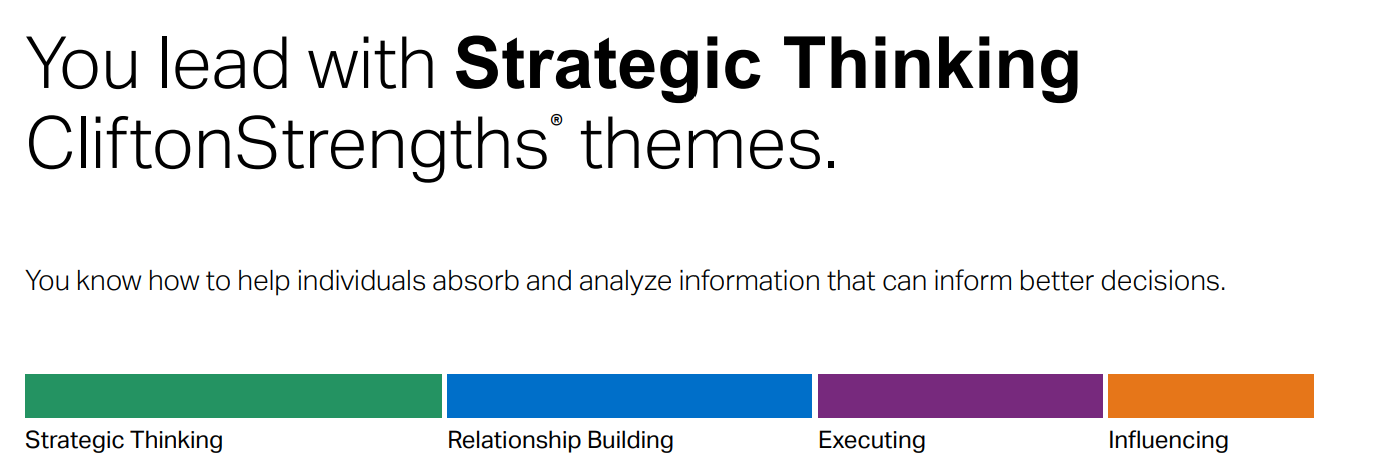
What CliftonStrengths® Gives You
CliftonStrengths® identifies your top natural talents from 34 themes, organized across four domains: Executing, Influencing, Relationship Building, and Strategic Thinking. As a leader it helps you identify your primary leadership style (example from image above).
Far from boxing you into a specific type, what is powerful is that it gives you language for what you bring to the table and what you need to thrive as you lead your organization.
The value of that two-part framework, what you bring and what you need, compounds as you use it across your organization: it becomes a shared language for real conversations with teammates, direct reports, and collaborators.
For multicultural leaders and highly sensitive leaders, CliftonStrengths® is often the first framework that names their complexity as strength rather than complication. Themes like Empathy, Connectedness, Individualization, and Input show up in their profiles and suddenly what they were told was "too much" has a name and a function.
CliftonStrengths® is also built for partnership. Understanding how your themes interact with another person's, where you complement each other and where you create blind spots together, is where the real leadership development happens.
What it doesn't reach: how you respond to stress, pressure, and negative emotion under pressure. And for many leaders, particularly those who feel things deeply, that is not a minor detail. This is where the Big 5 comes in.
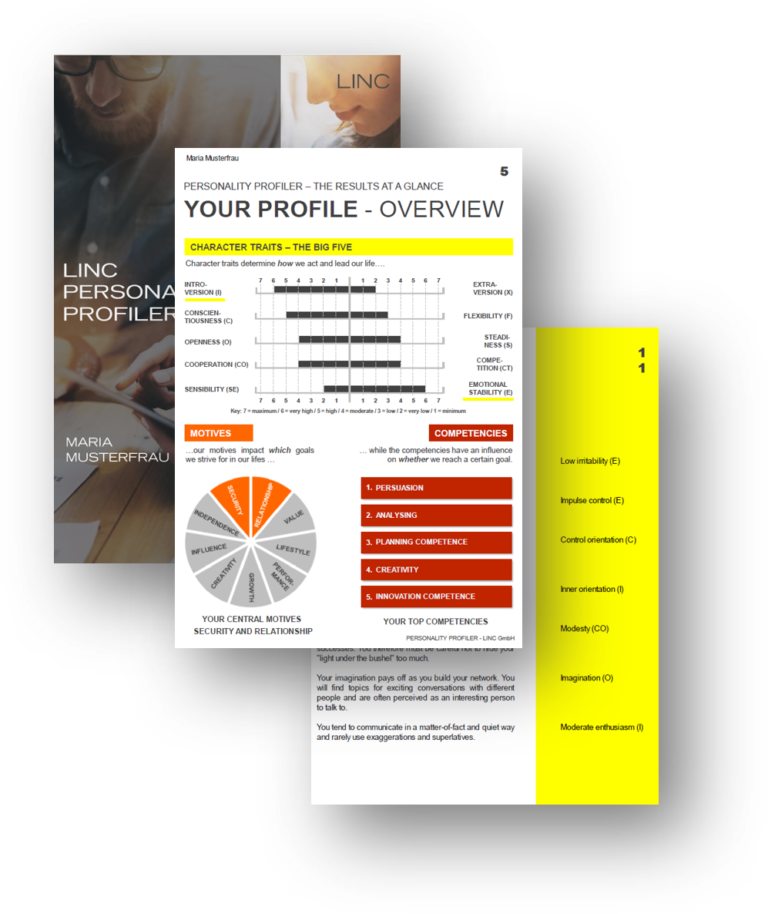
The BIG FIVE
Also knowns as OCEAN for its five dimensions, is the most scientifically validated personality framework in psychology. LINCPP pictured here is one of many tools used to measure the Big Five for work and leadership.
What the “Big Five” Gives You
The Big Five (AKA OCEAN), is the most scientifically validated personality framework in psychology. It measures five core dimensions of personality, each on a spectrum:
Openness: exploratory and abstract vs. concrete and practical
Conscientiousness: structured and disciplined vs. flexible and spontaneous
Extraversion: energized by people and stimulation vs. energized by depth and reflection
Agreeableness: attuned to others and consensus-oriented vs. independent and direct
Sensitivity (Neuroticism): emotionally reactive and intense vs. stable and resilient
There are many ways to take a Big Five assessment. Some are free and available online. Others, like the LINC Personality Profiler that I am certified to administer, are designed specifically for leadership and work contexts and go much deeper.
What most versions share is something CliftonStrengths® cannot offer: a clear picture of the Sensitivity dimension. Gallup's own research found that CliftonStrengths® themes correlate meaningfully with four of the five Big Five dimensions, but not with Sensitivity. If this dimension is significant in your wiring, your strengths profile simply will not show you that.
The LINC Personality Profile, which is more detailed version of the The Big Five, is also more focused on surfacing blind spots. It’s great preparation for a 360 as it helps you see what you are not seeing about yourself before you ask others to reflect it back.
The tradeoff is convenience. In my experience, the CliftonStrengths reports are really easy to understand and apply, specially when working with teams. There is not current tool I know of that creates practical results for teams.
Where They Intersect
These are not competing frameworks. Gallup's own research shows that CliftonStrengths® themes correlate directly with 4/5 of the Big Five dimensions:
Your Strategic Thinking themes are an expression of your Openness.
Your Executing themes reflect your Conscientiousness.
Your Relationship Building themes map to your Agreeableness.
Your Influencing themes trace back to your Extraversion.
When you understand the Big Five, your CliftonStrengths® profile gains depth. You can see not just what you do naturally, but why it comes so easily, and where the edges of that natural tendency create blind spots worth watching. Again, the Big Five adds the Sensitivity dimension which does not correlate with any CliftonStrength theme.
So Which One Do You Take?
Both assessments will give you something valuable on their own. CliftonStrengths® is immediately readable and practical, specially when working with others. The Big Five provides you details about sensitivity and provides depth on blindspots. Reading either report will teach you something real about yourself.
But what I've seen over years of working with leaders is that what unlocks true value is what you do with the results. A coach helps you see what the report can't show you directly: how your themes show up in the specific relationships and pressures of your actual leadership context, where your strengths are quietly becoming limitations, and what you've been minimizing about yourself that is actually your most powerful contribution.
CliftonStrengths® is where I start with most leaders I work with because the language travels. Leaders can use it with their teams and their partnerships. The Big Five gives a deeper dive around the dimensions that CliftonStrengths® cannot reach: stress, reactivity, and sensitivity, while also given more detail around blindspots.
Book a free call with me to take practical action based on deep insight
If you're ready to unlock your potential and explore how CliftonStrengths or the Big Five can enhance your productivity and growth, let's connect! Contact me today by filling the form below (in English or Spanish) to request a free 30-minute consultation and start taking action based on your strengths.
